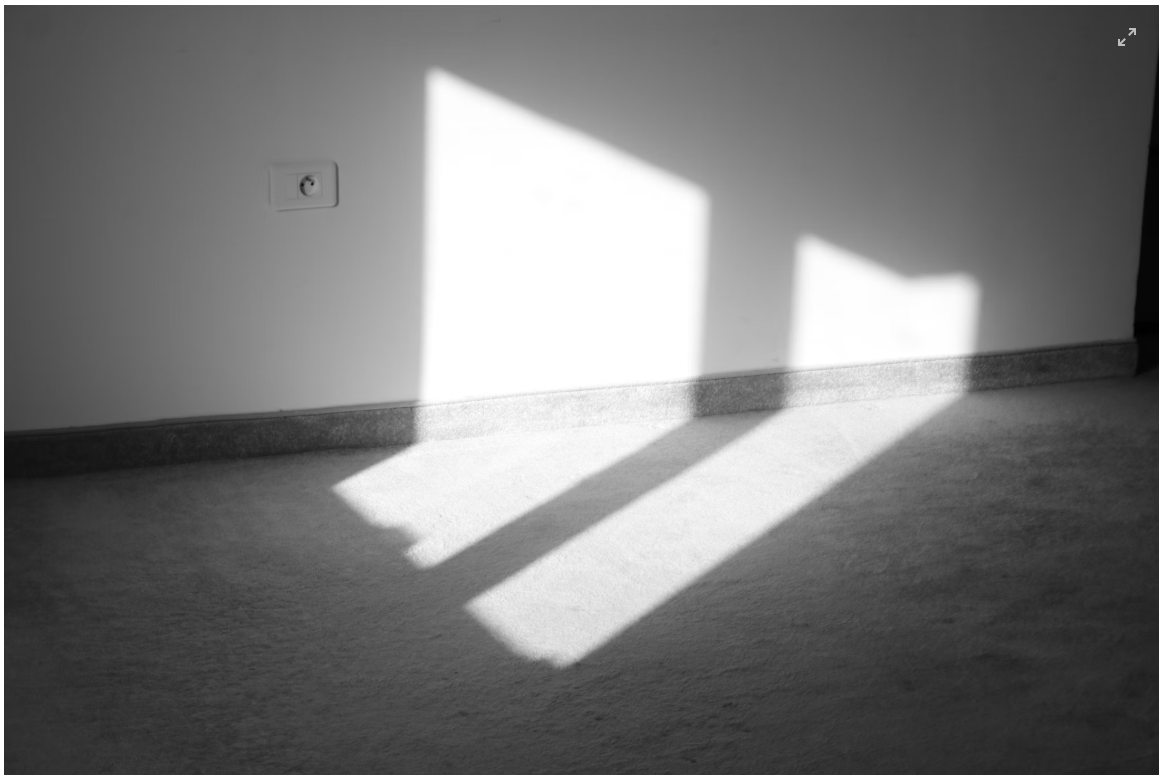
Johatsu refers to the phenomenon of people voluntarily disappearing without a trace- from their homes, families and their general societal connections to start new lives elsewhere. In Japanese, it literally translates to evaporate into the night- like a silent extraction. It emphasises a hard reset- a severance of ties with one’s past.
The practice sounds exactly how it is carried out; a professional company is available for hire to ensure the process is meticulously handled with extreme professionalism. According to a number of estimates about 80,000 to 100,000[1] Japanese people disappear annually. One of the causes for people to go this route is the crushing weight of expectations in the unforgiving society today. Maybe the world is so messed up it’s not worth carrying on faking a smile masking a miserable self at their very core. You don’t want to fit in anymore, you want out. People going missing may not be a uniquely Japanese problem but the social backdrop in which the urban society has evolved over last few decades make the persistence of johatsu more commonplace.
Japan has wielded its soft power as a picture-perfect country people visit to witness cherry blossoms, experience the culture and hang around in izakaya watering holes. Of course, the stunning natural beauty is a crowd puller taking you through countryside, samurai villages and towns forged in folklores of craftsmanship. Japanese blade has as much of a pull as their love for cars. One thing becomes absolutely clear – Japanese take their craftsmanship seriously. The school system and larger society has embraced creativity and individual expression that one finds missing in life of a white-collar worker joining the workforce. The reality beneath is suffocating.
Starting out as a salaryman in Tokyo equates to signing off on entering the gates of hell, one that is hard to escape. One wakes up early to take the train that is stuffed with soul-less bodies like tuna can ending the day late into the night. No extra pay. No appreciation for the work. Just grinding soul crushing culture at work. To quantify the magnitude of this- there are books available in Japan that lays out a strict code of conduct you are expected to follow: bow down to authority, never cut short your senior. Always abide by the rules of authority. Smallest of mistakes could invite a public humiliation – a sort of rite of passage in the Senpai & Kouhai relationship. The students fiercely compete for their place in a few names brand university. Their entire career is chalked out before they turn 20. The cultural warning that a nail that sticks out get hammered down is lived in real time in these workplaces where nonconformity is a silent killer.
Becoming your own ghost
Some people choose to vanish without a trace. One day they will not turn up to work, they will not call their home and leave everything behind in the silence of the night. They become invisible when being visible is unbearable. Some social standards view johatsus as failures often seen having chosen an easy path to escape responsibilities, weaklings who didn’t fit in the machinery buried by the weight of expectations and from society itself.
Elsewhere emotional repression and crushing social expectations would lead to another form of disappearance, suicide. Johatsu offers an anomaly another path for the disenfranchised and disillusioned. Would a parent prefer a son that is dead or one that is still breathing but withdrawn from their roles and expectations.
The emotional and social costs are undeniably difficult to quantify. We are treated as just another cog in the society’s well-oiled machinery- they tell you that there is room at the top but if you behave and tow the line. Though all of us are more than just a number on the payroll. We aspire, struggle to fit into the mould so hard we forget who we are destined to become? Our purpose was never to sit in a cubicle being yelled at by a superior. There is a calling that is greater than this eventual finality that is presented to us as a shining badge of honour that if we endure it we come out the other end with our characters forged in steel- unshakable? It’s not from my vantage point.
The johatsus leave behind spouses, children and parents. They are denied the closure they deserve often leaving them in a limbo. Seeing their loved ones disappear into the night like evaporated rain stays with them. Does being denied the opportunity to part ways with gratitude have altered the course of decision due? I have to confess that It would make the departure an incredibly emotional affair to discharge after all said and done.
We live wrapped in the illusion that our identity is something we are born with, a fixed form we are condemned to carry through life like chains tied to a post. However, identity just like our memory and physical presence, is not only central but it is relational. Identity is only real because it is mirrored to us in the eyes of others. You are a father because someone calls you one. You are a friend because someone remembers you as one. You exist not merely because you breathe, but because someone notices the sound of your breath in a shared room. You need a witness for a life to be lived.
When someone becomes Johatsu, when they vanish without a goodbye, without a note, what they leave behind is not just an absence, but a severing. Of bonds. Of names. Of roles. Their departure is often seen as a loss of identity. But what if, beneath that judgment, lies a deeper truth? That sometimes to remember who we are, we must first remove ourselves from who we were told to be.
In Japan, and in many cultures, the self is shaped early by school, cultures and by unspoken codes of behavior, by family lineage. This continuos conditioning is injected into psyche as providing safety, a sense of direction. But it comes at the risk of forgetting your own face - the one you had before the world assigned you a name, a role, a performance.
Jung once said, “The privilege of a lifetime is to become who you truly are.” For some, this can not happen within the mundane rituals of their daily life. Not in the artificial lights and souls within an office. Not in the rigid structures of hierarchical dynamics. Not when they are under the pressure to smile, comply, obey, and endure to fulfil social code.
If no one remembers who you are, are you still yourself?
The Johatsu goes beyond our common fantasies of disappearing. They do something most of us only dare to imagine, walking out and severing relationships personal or not all at one time. They walk into the darkness to deconstruct themselves- this time away from the crippling cultural and moral code weighing them down to the bottomless pit of darkness they want to escape.
"As I took the backseat in a wagon with tinted windows, I saw my room’s lights were still on – I will never be coming back to it yet the lights will remain on for my wife to find a note I left her. A plain paper with some words scribbled to detail money left for her and sidenote about my departure. I was the sidenote in my own destiny until tonight. The car races away from the city limits, the familiarity also fades away into a familiar darkness I felt within me. All these city lights and history were not enough to bind me to anything. I had to leave this city, myself and the bonds I created all these years. They had to be severed into oblivion just like this moment in time that will never return. I would beg forgiveness from my wife, friends and my parents about my decision to leave hoping they would understand. I chose to walk away in silence, with unresolved goodbyes. The pain doesn’t get any less for them.
I do find comfort in human condition, the world does not stop for anyone even when I am no longer in the picture, my image will fade away in the minds of my loved ones- what remains then? Apparently, our self is as much internal as it is borrowed. If one can sit with themselves in darkness, in silence and in solitude with no one calling their names – is that not enough for an identity?"